
Lake Elementaita basin has one of the oldest archeological sites belonging to the Oldowan period with stone tools dating to 700,000 years ago found at Kariandusi. The Obsidian mines at the Eburru Mountains are evidence of Obsidian trade dating over 3,000 years ago. Subsequently the region was occupied by pastoral Neolithic, later the Maasai pastoral community who called it “Elementaita”. During the colonial occupation, the whole area between Elementaita and Naivasha was taken over and used for livestock and wildlife ranching by Lord Delamere.
The area around Lake Elementaita was designated an Important Bird Area (IBA), a site of global significance for bird and biodiversity conservation, in 1999. The lake was designated a Ramsar site (wetland of international importance) in 2005. It was gazetted as a National Wildlife Sanctuary in 2010 and listed together with Lakes Nakuru and Bogoria as the Kenya Lakes System in the Great Rift Valley World Heritage Site by UNESCO in 2011.
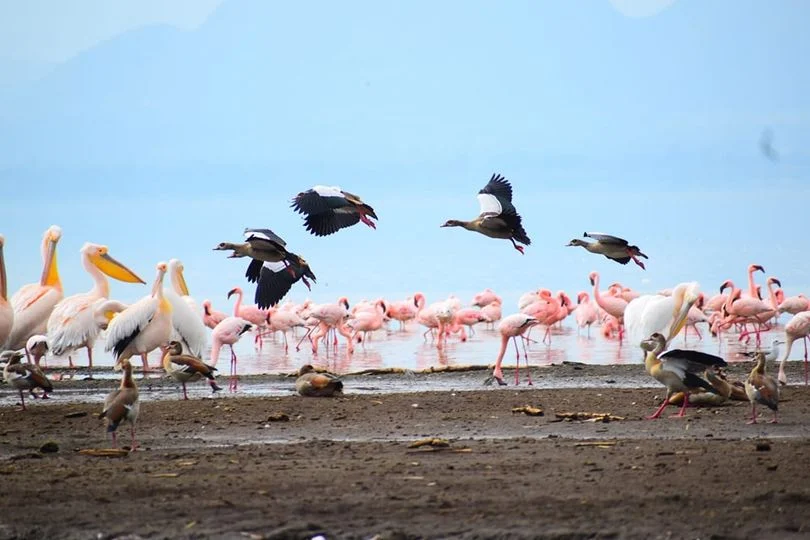
Lake Elementaita is an important natural habitat for in-situ conservation of biological diversity including globally and regionally threatened species of outstanding universal value. It consistently holds internationally important populations of Greater and Lesser Flamingo, Great White Pelican, African Spoonbill, Pied Avocet as well as other water bird species that occur in smaller populations.
The terrestrial habitats support the conservation of herbivores such as the endangered Rothschild’s giraffe as well as Elands, Buffaloes, Common Zebras, Impalas, Reedbuck, bushbuck and Colobus monkeys. Carnivores present include lions, Leopards, hyenas and jackals. The endemic Kenyan Horned Viper (Bitis worthingtonii) all found in the neighboring Soysambu conservancy.